An orthodontist is not the same as a family dentist. While both work in the field of dentistry, each has a different role. Some people think that visiting an orthodontics clinic is only to get kids braces. In reality, an orthodontist works with adults and young children. This dental care professional does more than just apply braces. Learn the signs that would prompt a visit to an orthodontist.
Fix the problem by going to an orthodontist
Fortunately, an orthodontist can correct several problems associated with the teeth, mouth, and jaw. With additional education and training, they can fix even significant issues. For people who suspect they need to see someone other than their regular dentist, scheduling an appointment is the solution. Discover some of the things to consider.
1. Beyond normal dentistry
A dentist plays a vital role in a person maintaining good oral health. Dentists are responsible for a variety of things, including cleanings, examinations, fillings, and crowns. People should continue to see the dentist as part of a regimen to keep their mouth healthy. A dentist can also help whiten teeth. However, sometimes a patient needs a different treatment other than what a dentist can provide. In that case, it is a good idea for patients to see an orthodontist.
2. Overcrowding
Sometimes, children are born with large teeth or small jaws. Either way, once adult teeth begin to develop, it creates a problem of overcrowding. At the same time, teeth can shift as a person grows older. Regardless of the scenario, someone with too many teeth to fit the available space needs to see an orthodontist. As a treatment, the orthodontist would recommend tooth extraction, braces, invisible retainers, or a combination of these. Of course, that depends on the patient, the exact cause, and the severity of the problem.
3. Multiple treatments
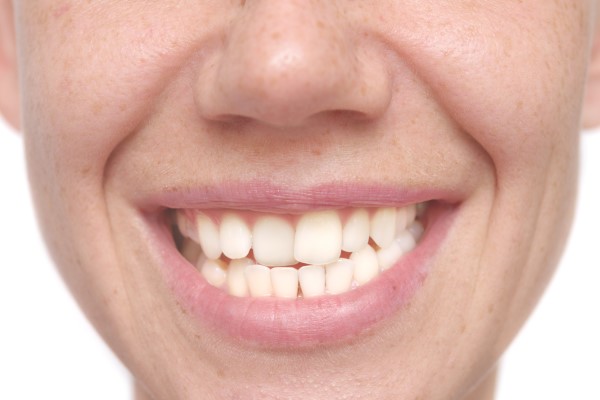
The most obvious sign of needing to see an orthodontist has to do with misaligned or crooked teeth. Often, the correct treatment comes in the form of braces. Along with the traditional metal type, orthodontists can apply braces made from ceramic. Another option is applying lingual braces that adhere to the backside of the teeth or use some kind of clear aligner system. The orthodontist determines the appropriate option during the initial examination.
4. Over, under, or open bite
An orthodontist helps people with abnormal bites, including an overbite, underbite, and open bite. Since both an overbite and underbite can lead to various dental issues, it is important to have this corrected. Otherwise, a person could experience premature tooth wear. As for an open bite, this occurs when the top and bottom sets of teeth do not touch. This makes chewing or biting down difficult.
5. Mouth or jaw pain
If people begin to experience pain in the mouth or the jaw, they should see an orthodontist. For this type of issue, there could be any number of underlying factors. One, in particular, is TMD. This involves the misalignment of the jaw. The jaw pops in and out of place when chewing, yawning, or eating. Below are some causes of mouth or jaw pain:
- TMD or temporomandibular disorder is the most common cause of mouth or jaw pain. This condition affects the TMJ or temporomandibular joint. This joint is the hinge that helps the lower jaw move. It also attaches the lower jaw to the head. TMD can arise from painful jaw muscles, jaw joint injury, or arthritis of the jaw joint’s protective disc.
- Sinus problems can also cause jaw or mouth pain. There could be a viral or bacterial infection in the sinuses. This can cause an overproduction of mucus, which places excessive pressure on the jaw joint. The pressure causes pain in the mouth or jaw.
- Cluster headaches can cause pain around or behind one of the eyes. This pain can spread to the jaw.
- Tooth pain from severe infections, such as dental abscesses, can radiate to the jaw. This pain is often unbearable.
- Trigeminal neuralgia can also cause mouth and jaw pain. This condition develops from nerve compression on the trigeminal nerve. This specific nerve gives sensation to most regions of the face. It affects the upper and lower jaws.
Knowing the signs can resolve your dental issues right away
Whether for yourself or your children, if something seems out of the ordinary, you should visit your family dentist. But if the family dentist cannot correct the problem, you will get a referral to an orthodontist. That individual will conduct the appropriate testing to identify the problem. From there, the orthodontist will recommend the correct treatment.
Request an appointment here: https://nettsmiles.com or call Nett Pediatric Dentistry & Orthodontics at (623) 759-7658 for an appointment in our Phoenix office.
Check out what others are saying about our dental services on Yelp: Orthodontist in Phoenix, AZ.
Recent Posts
A kid-friendly dentist offers specialized care for children of all ages. During a visit with a pediatric dentist, parents can expect them to perform diagnostic services from dental X-rays to an oral examination. They may also perform a routine cleaning or general restorative work. Helping a child understand what to expect at a dental checkup…
A kid-friendly dentist can reduce the level of nervousness a child experiences while they are receiving dental care. They can also educate children in a manner that children understand and help them to create healthy habits that can carry well into their teenage and adult years. Keep reading to learn about the long-term benefits of…
Pediatric dentistry provides children with a more focused form of dental care. Seeing your dentist on a regular basis can help maintain the child’s oral health. This can help bring about more benefits in the long run. Here are the important points about pediatric dentistry that parents and children must know about.Many kids and adults…
A kid-friendly dentist educates children on how to improve their oral hygiene at home. These lessons can help as children grow older and become more independent. A kid-friendly dentist focuses on tailoring their office atmosphere and services to make it most comfortable for younger children.Every dentist has a unique way of educating their patients. These…